
Creating a standalone graphic design program
Turning an embedded emphasis into a distinct, industry-aligned academic program
At Lakeland University, graphic design was an emphasis within the Art major, limiting its visibility and its ability to reflect contemporary practice. As Assistant Professor of Graphic Design, I led the work to establish it as a standalone academic program—shaping the strategy, developing the curriculum, and guiding the proposal through institutional review.
- Role
- Program leadCurriculum designer
- Scope
- Program strategyCurriculum redesignEvidence gatheringApproval
- Partners
- FacultyAcademic leadersAdministrative leaders
- Timeline
- 2016–2017Enrollment tracked through 2021
- Outcome
- Standalone major and minor launched in fall 2017Enrollment nearly tripled by April 2021
The challenge
The work began as a curriculum revision, but the deeper need was structural. Creating an independent program required us to demonstrate student demand, distinguish Graphic Design from Studio Art, modernize the curriculum, and build confidence that it could support enrollment goals. The proposal also needed alignment across school faculty, an academic programming committee, executive leadership, the full faculty, and the university’s accreditation liaison.
My approach
I reframed the work around two needs: what students required from a relevant graphic design education and what evidence the university required to support it.
Working with faculty and administrative partners, I developed the proposal and curriculum materials. In response to reviewers’ questions, I incorporated admissions-funnel data, market demand, prospective-student interest, competitive context, and facilities considerations. I also helped define Graphic Design and the newly named Studio Art program as distinct but complementary disciplines.
The redesigned curriculum added interactive design, motion graphics, brand identity, web and app design, and community-based work—connecting students’ academic experience more closely to contemporary practice.
The outcome
The concept received institutional approval in February 2017 and formal faculty approval in April. The accreditation liaison determined that no additional formal review was required, allowing Lakeland to launch the standalone Graphic Design major and minor in Fall 2017.
Active enrollment in the standalone program grew from 12 majors and minors in January 2018 to 33 by April 2021—a 175% increase. By the 2021 program review, many design courses were filling, and the university had committed to moving the program into a classroom three times larger. Students gained a more visible, focused pathway into the design profession, while Lakeland gained a program positioned for continued growth.
Graphic Design program webpage
The public program page makes the outcome tangible. It presents a commercially focused curriculum, cooperative education, and real-world design projects—carrying forward the industry alignment and experiential learning at the program’s foundation.
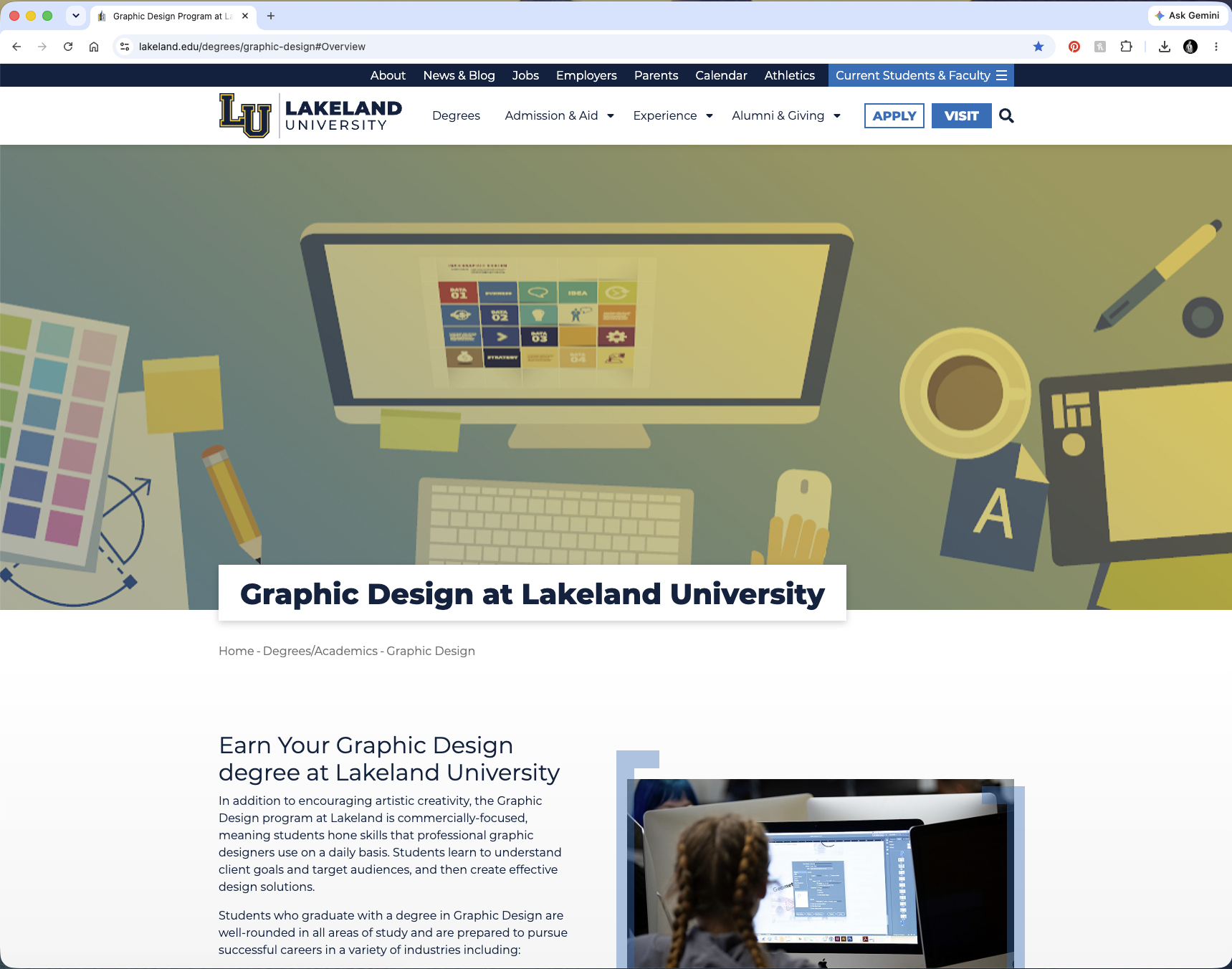 View the Graphic Design program
 Leadership in practice
- Hands-on strategic leadership
- I shaped the direction while developing the proposal, evidence, and curriculum.
- Cross-functional leadership
- I aligned academic and administrative perspectives across multiple levels of review.
- Connecting creativity to organizational results
- I connected an industry-relevant student experience to sustained enrollment growth and institutional investment.
Achievements

Design Thinking for Human Problems
In this 2018 TEDx talk, I shared design thinking as a human-centered way to approach complex problems and translated design methods into clear, accessible ideas for a broader audience.
Watch the TEDx talk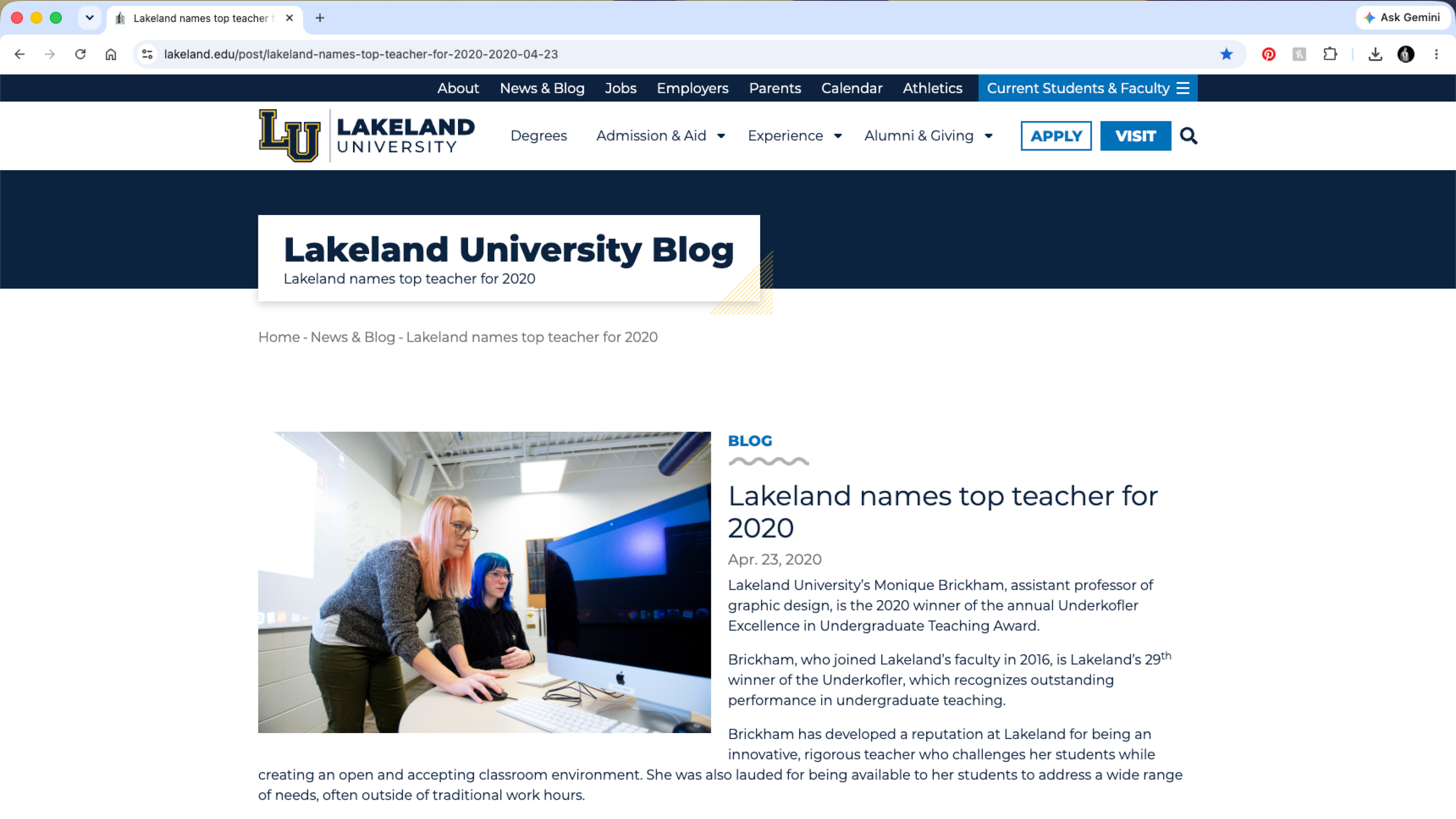
Lakeland names top teacher for 2020
The Underkofler Award article credits me with leading the creation of the standalone major and connects the program to a rigorous, inclusive, and community-engaged student experience.
Read the award featureIf you’re building or strengthening a brand, process,
or team—I’d love to connect.